Why Low-Calorie Treats Matter More Than Ever
More than half of pet dogs in the United States are now overweight or obese, and treats are a big part of how it happens. A single commercial biscuit can pack 50 calories or more, and most owners hand out several a day without thinking twice — on top of full meals. For a small dog, those “little extras” can quietly add up to a second dinner. Extra weight is not just a cosmetic issue: it raises the strain on joints, makes breathing and heat tolerance harder, and shortens the average dog’s life.
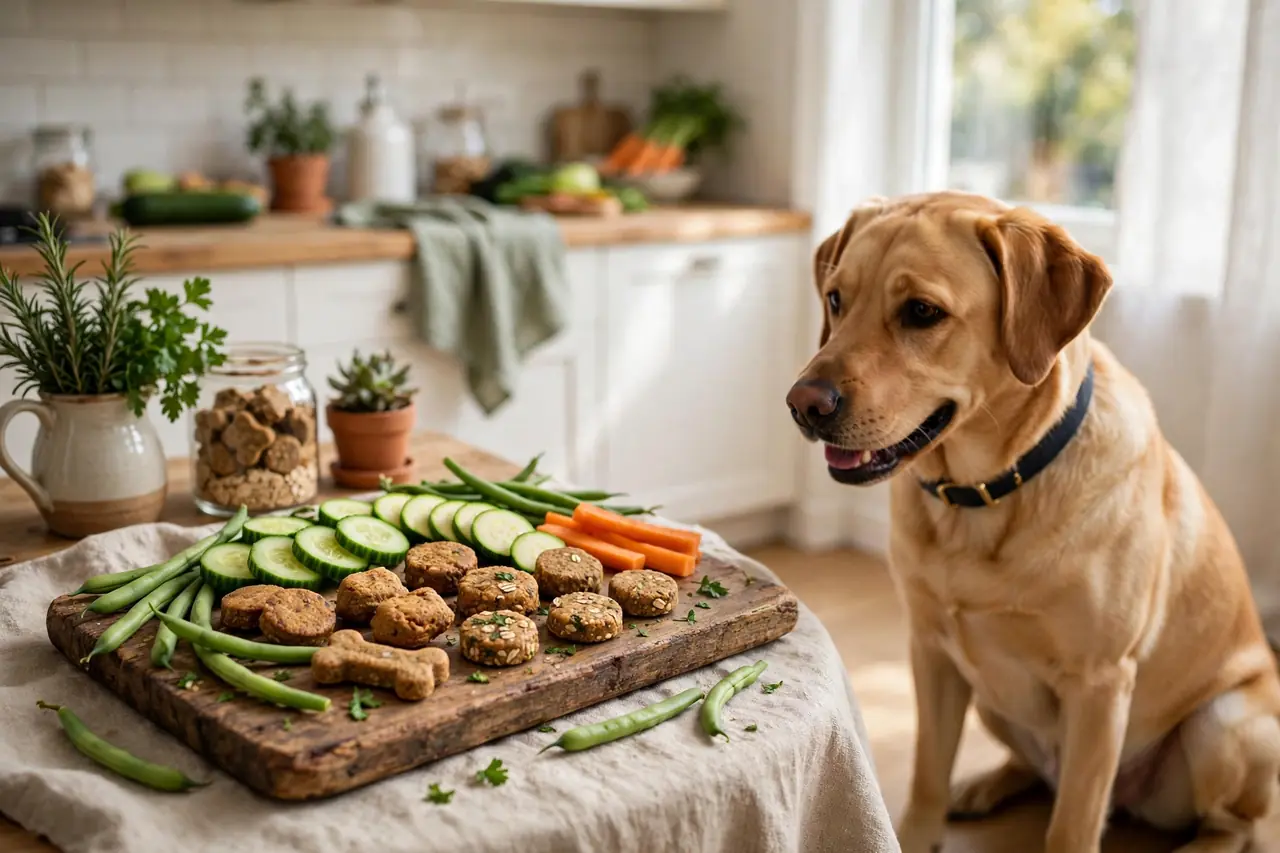
The good news is that treats do not have to disappear from your dog’s life. Vets generally recommend that treats make up no more than 10% of a dog’s daily calories, and the recipes below are built to fit comfortably inside that budget. The strategies are simple: use water-rich vegetables and fruits as the base (green beans, cucumber, zucchini, carrots, seedless watermelon, apples, pumpkin), bake or freeze treats in small training-size pieces so one reward is a taste instead of a meal, choose frozen and dehydrated formats that feel substantial without dense doughs, and lean on strong natural flavors so a tiny portion still feels exciting to your dog.
Every recipe below includes a rough per-treat calorie estimate. Treats are sized small on purpose — you get more rewards, more training reps, and a happier waistline.
18 Low-Calorie Homemade Dog Treats
1. Frozen Green Bean Crunchers
The easiest treat on this list, at roughly 2 calories per bean. Green beans are naturally low in calories, full of fiber, and dogs seem to love the icy crunch. Freezing them turns a plain vegetable into something that feels like a real event, especially on warm days or for dogs who inhale soft treats in half a second.
Ingredients & method: Wash 2 cups fresh green beans and trim the ends. Spread them in a single layer on a parchment-lined tray and freeze for at least 3 hours, until rock hard. Store in a freezer bag for up to 3 months and serve straight from the freezer, 2–3 beans at a time.
2. Cucumber Cooler Ice Bites
Cucumber is mostly water, which makes it one of the lowest-calorie foods you can offer a dog — about 3 calories per bite here. A hint of mint makes these smell fresh and interesting, and the frozen texture keeps dogs busy licking instead of gulping. They are a brilliant hot-weather reward for dogs watching their weight.
Ingredients & method: Blend 1 large cucumber (peeled), 1/4 cup water, and 3–4 fresh mint leaves until smooth. Pour into silicone ice-cube trays and freeze 4 hours. Pop out and serve one cube at a time.
3. Zucchini Oat Bites
Zucchini disappears into these soft little bites, adding moisture and bulk for very few calories — around 12 calories each. The oats give just enough body to hold them together, and because they bake up small, a dog can earn several during a training session without blowing the day’s treat budget.
Ingredients & method: Mix 1 cup finely grated zucchini (squeezed dry), 1 cup oat flour, and 1 beaten egg. Drop teaspoon-size mounds onto a lined baking sheet and bake at 350°F (175°C) for 15–18 minutes, until set and lightly golden. Cool completely before serving.
4. Pumpkin Soft-Bakes
Plain pumpkin puree is a weight-watcher’s secret weapon: high in fiber, naturally sweet, and only about 15 calories per soft-baked square here. Fiber helps dogs feel satisfied on fewer calories, which is exactly what you want from a treat for a dog on a diet. These stay soft, so they suit seniors and small mouths too.
Ingredients & method: Stir together 1 cup plain pumpkin puree (not pie filling), 1 1/2 cups oat flour, 1 egg, and 1/2 teaspoon ground cinnamon. Spread the batter 1/4-inch thick on a lined sheet, bake at 350°F (175°C) for 20–22 minutes, then cut into 1-inch squares while warm.
5. Seedless Watermelon Pupsicles
Watermelon is sweet, hydrating, and surprisingly light — roughly 5 calories per pupsicle. Dogs go mad for the flavor, and the frozen format stretches a tiny amount of fruit into a long, licky reward. Always use seedless melon and remove every trace of rind, which is hard for dogs to digest.
Ingredients & method: Blend 2 cups seedless watermelon flesh (rind and seeds removed) until liquid. Pour into ice molds or small paper cups and freeze at least 4 hours, until solid. Serve one at a time, ideally outdoors or on an easy-clean floor.
6. Cinnamon Apple Chips
Slow-baking concentrates an apple’s flavor into a crisp, sweet chip at about 8 calories per slice — no added sugar needed. These keep well, travel well, and make a satisfying crunchy alternative to calorie-loaded biscuits. A dusting of cinnamon adds warm, bakery-style aroma for zero meaningful calories.
Ingredients & method: Core 2 apples and slice them as thinly as you can (about 1/8 inch). Lay slices on a lined tray, sprinkle lightly with cinnamon, and bake at 200°F (95°C) for 2 hours, flipping halfway, until dry and crisp at the edges. Cool fully; they crisp more as they sit.
7. Dehydrated Carrot Coins
Carrots bring natural sweetness, beta-carotene, and serious crunch for about 4 calories per coin. Dehydrating shrinks them into chewy little discs that take longer to eat than a raw chunk, which matters for dogs who treat every snack as a race. They are also gentle on the stomach.
Ingredients & method: Slice 4 large carrots into 1/4-inch coins. Arrange on dehydrator trays or a lined baking sheet and dry at 170°F (75°C) for 5–6 hours (or use a dehydrator at 135°F/57°C for 6–8 hours) until leathery-chewy. Store in an airtight jar.
8. Sweet Potato Jerky Strips
One ingredient, endless chewing satisfaction. Thin sweet potato strips dry into a jerky-style chew at roughly 16 calories per strip — a fraction of commercial chews, which often hide oils and syrups. Cutting the strips thin keeps the calories per piece modest while still giving jaws a workout.
Ingredients & method: Scrub 2 sweet potatoes and slice lengthwise into strips about 1/4-inch thick. Lay them on a lined tray and bake at 250°F (120°C) for 2 1/2–3 hours, flipping once, until dry and chewy. Cool completely before serving; store refrigerated up to 2 weeks.
9. Blueberry Yogurt Drops
Tiny frozen drops that taste like dessert for about 6 calories each. Plain yogurt brings protein and probiotics, blueberries bring antioxidants and a burst of flavor, and the small size means you can scatter a handful as a jackpot reward without a calorie hangover.
Ingredients & method: Mash 1/2 cup fresh blueberries into 1 cup plain, unsweetened low-fat yogurt. Pipe or spoon dime-size dots onto a parchment-lined tray and freeze 2–3 hours until firm. Transfer to a freezer bag and serve 3–4 drops at a time.
10. Banana Oat Training Tidbits
Training treats need to be small, soft, and fast to eat — these pea-size tidbits are all three, at about 8 calories each. Banana binds the dough and adds sweetness without sugar or fat, and because the pieces are tiny, a full training session costs fewer calories than one standard biscuit.
Ingredients & method: Mash 1 ripe banana and mix with 1 cup oat flour and 1 egg to form a soft dough. Roll into pea-size balls (or pipe small dots), place on a lined sheet, and bake at 325°F (165°C) for 12–14 minutes. Cool; store refrigerated up to a week.
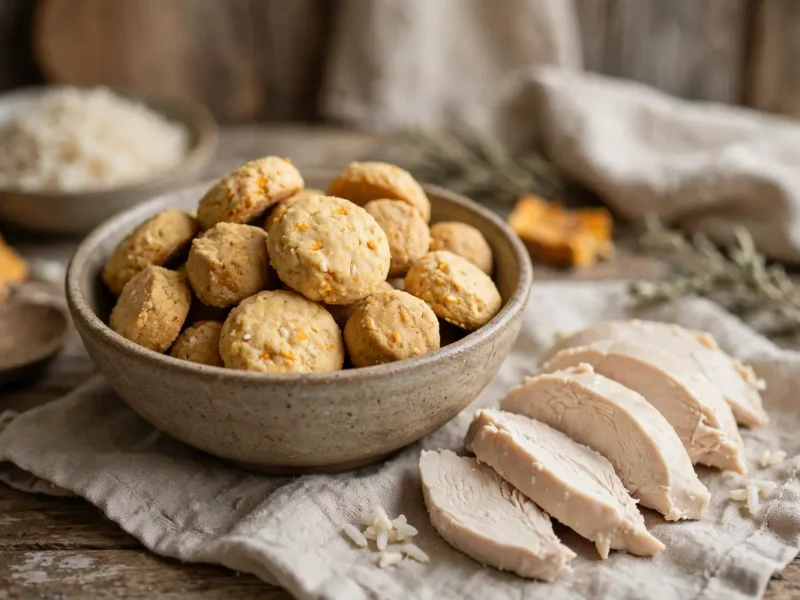
11. Lean Chicken & Veggie Mini Meatballs
For dogs who turn up their noses at vegetables, a little lean protein goes a long way. These mini meatballs are mostly grated carrot and zucchini held together with chicken breast, landing at roughly 20 calories each — rich-tasting, but far lighter than fatty commercial meat treats.
Ingredients & method: Mix 1/2 pound ground chicken breast (or finely chopped cooked chicken breast), 1/2 cup grated carrot, 1/2 cup grated zucchini (squeezed dry), and 1 egg. Roll into 1-inch balls and bake at 375°F (190°C) for 18–20 minutes, until cooked through (165°F/74°C inside). Cool before serving.
12. Frozen Pumpkin Yogurt Lick Cups
Freezing a thin layer of pumpkin and yogurt in a silicone cup turns about 9 calories into several minutes of happy licking. Licking is naturally calming for dogs, so these pull double duty as a low-calorie enrichment activity after walks or during thunderstorms.
Ingredients & method: Whisk 1/2 cup plain pumpkin puree with 1/2 cup plain, unsweetened low-fat yogurt. Spoon a thin layer into silicone muffin cups and freeze at least 3 hours. Serve in the cup so your dog can lick it clean.
13. Spinach & Egg-White Puffs
Feather-light puffs with a savory, eggy flavor dogs love, at roughly 7 calories each. Egg whites deliver protein with almost no fat, and a handful of spinach blends in nutrients and color without adding calories worth counting. They bake quickly and crumble easily over food as a topper.
Ingredients & method: Blend 1 cup fresh spinach with 3 egg whites until smooth and frothy. Spoon small mounds onto a parchment-lined sheet and bake at 300°F (150°C) for 12–15 minutes, until set and just dry on top. Cool before serving.
14. Garden Crunch Sticks
Sometimes the best low-calorie treat is barely a recipe at all. Crisp carrot and cucumber sticks with a whisper-thin yogurt “dip” come in at about 5 calories per serving, and the crunch is genuinely satisfying for dogs who love texture. Keep a tub prepped in the fridge for grab-and-go rewards.
Ingredients & method: Cut 2 carrots and 1 cucumber into finger-length sticks. Spread 1/4 cup plain, unsweetened low-fat yogurt in a thin layer on a plate for dipping (a light swipe per stick is plenty). Chill the sticks at least 1 hour for maximum crunch and serve 2–3 sticks at a time.
15. Strawberry Banana Smoothie Bites
All the flavor of a smoothie in a frozen, portion-controlled bite at about 8 calories each. Strawberries and banana are naturally sweet enough that no dog will suspect these are “diet food,” and freezing stretches the eating time so the reward feels bigger than it is.
Ingredients & method: Blend 1 banana, 1 cup hulled strawberries, and 1/4 cup plain, unsweetened low-fat yogurt until smooth. Pour into small silicone molds and freeze 3–4 hours until solid. Serve 1–2 bites at a time.
16. Apple & Green Bean Crunch Cookies
A baked cookie that earns its crunch from vegetables instead of fat — around 13 calories per cookie. Finely chopped green beans fold invisibly into an apple-and-oat dough, adding fiber and bite while keeping the calorie count in treat territory rather than snack territory.
Ingredients & method: Mix 1 cup oat flour, 1/2 cup unsweetened applesauce, 1/2 cup very finely chopped green beans, and 1 egg. Roll out to 1/4 inch, cut small shapes, and bake at 350°F (175°C) for 18–20 minutes until firm and golden at the edges.
17. Zucchini Chips
The chip your dog can actually have. Paper-thin zucchini slices dry into delicate, savory crisps at roughly 3 calories per small handful. They shatter satisfyingly, smell faintly roasted, and are so light you can use them as a guilt-free “just because” treat several times a day.
Ingredients & method: Slice 2 medium zucchini into 1/8-inch rounds and pat very dry. Arrange in a single layer on a lined tray and bake at 225°F (110°C) for 1 1/2–2 hours, flipping once, until crisp. Cool fully — they crisp further as they cool.
18. Peanut Butter Banana Kisses
Proof that low-calorie does not mean no fun. These tiny drops use just a little peanut butter stretched across a whole batch, so each kiss lands at about 11 calories while still tasting properly indulgent. Because they are small and soft, they work beautifully as a high-value reward for recall practice.
Ingredients & method: Mash 1 ripe banana with 2 tablespoons xylitol-free peanut butter, then stir in 1 cup oat flour to make a soft dough. Pipe or drop 1/2-teaspoon dots onto a lined sheet and bake at 325°F (165°C) for 10–12 minutes. Cool before serving; refrigerate up to a week.
Portion & Weight-Management Guide
The 10% rule is your anchor: treats of all kinds — homemade, store-bought, dental chews, table scraps — should add up to no more than 10% of your dog’s daily calories, with the remaining 90% coming from a complete, balanced food. As a rough guide, a 10 lb (4.5 kg) dog eats about 400 calories a day, so treats should stay near 40 calories; a 30 lb (13.5 kg) dog at roughly 700 calories gets about 70 treat calories; a 50 lb (23 kg) dog near 1,000 calories gets about 100; and an 80 lb (36 kg) dog near 1,400 calories gets about 140. Inactive, senior, or already-overweight dogs need fewer calories overall, so their treat budget shrinks too.
Practical habits help as much as recipes. Break treats into smaller pieces — dogs care about the number of rewards far more than the size of each one. Swap some treat rewards for play, praise, or a few pieces of the dog’s regular kibble taken from their measured meals, and keep a treat log for a week; most owners are surprised by how much the household hands out. Weigh your dog monthly and aim for slow, steady loss of about 1–2% of body weight per week if they need to slim down.
Talk to your vet about weight if you cannot feel your dog’s ribs under a thin fat layer, if the waist has disappeared from above and the side, if weight keeps climbing despite careful portions, or before starting any serious weight-loss plan. Sudden weight gain can signal issues like an underactive thyroid, and dogs with diabetes, joint disease, or other conditions need a tailored plan rather than a generic one. Your vet can set a target weight and a daily calorie goal, which makes treat math like the estimates above much more precise.
Frequently Asked Questions
How many low-calorie treats can my dog have each day?
Count calories, not treats. Add up the estimates for everything your dog gets in a day — training tidbits, a chew, a lick cup — and keep the total under 10% of their daily calorie needs. For a medium dog on about 700 calories a day, that 70-calorie budget could be eight banana tidbits, or three mini meatballs, or a generous pile of frozen green beans. When in doubt, choose the lower-calorie option and reward more often with smaller pieces.
Are store-bought “light” or “diet” treats actually low in calories?
Not always. “Light” is a marketing term, and some diet-branded treats still contain 30–50 calories apiece once you read the fine print — the calorie statement is often buried on the back of the bag in small type. Check the kcal-per-treat figure, weigh it against your dog’s 10% budget, and be suspicious of any treat that does not state its calories at all. Homemade treats like the ones above have one advantage: you know exactly what went in.
Can puppies eat these low-calorie treats?
Yes, in small amounts, as long as the ingredients are dog-safe — which everything on this list is. Puppies are growing, so treats should stay well under 10% of their calories and never crowd out their balanced puppy food. Choose the softer options (pumpkin soft-bakes, banana tidbits, yogurt drops once fully frozen) in tiny pieces, introduce any new food gradually, and skip hard dehydrated chews until adult teeth are in.
Will low-calorie treats still work for training?
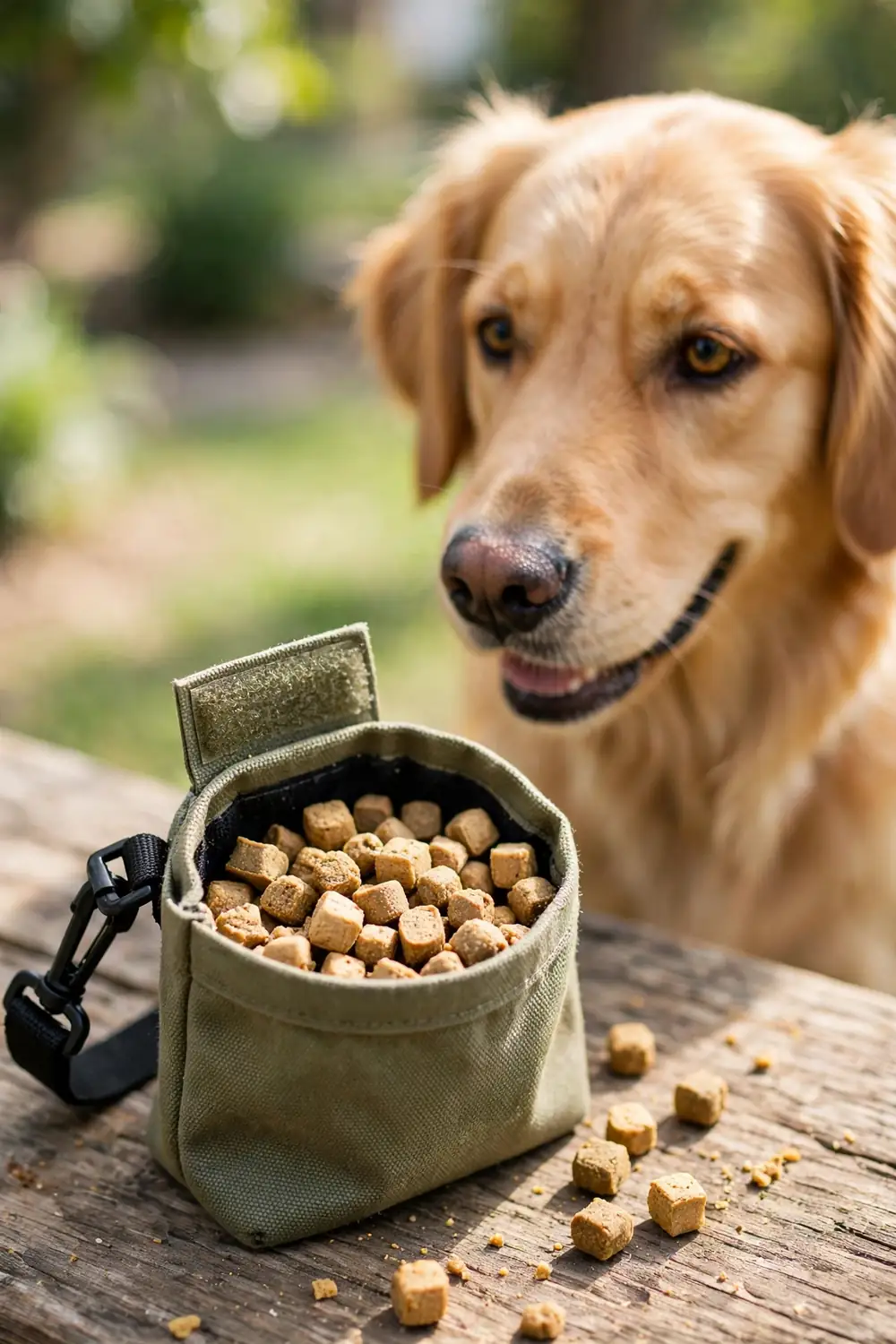
Absolutely — dogs respond to flavor, novelty, and how often the reward arrives, not to portion size. A pea-sized piece of something delicious, delivered the instant your dog gets it right, teaches just as fast as a big biscuit, and you can afford many more repetitions per session. Keep a mixed pouch (a few meatball bits, some tidbits, some frozen beans) so rewards stay unpredictable and exciting, and for truly distracting environments, spend your calorie budget on the highest-value option, like the mini meatballs.
My dog is on a vet-supervised weight-loss plan. Can I still use these recipes?
Usually yes, but check first. Bring the recipe list and calorie estimates to your vet or ask during your next weigh-in, because strict plans count every calorie, including training treats and chews. Your vet may set a specific daily treat allowance or suggest swapping treat calories out of meals. The vegetable- and fruit-based recipes here — green beans, cucumber bites, zucchini chips, carrot coins — are the ones most vets approve most easily, since they add the fewest calories for the most satisfaction.
The Bottom Line
A dog on a diet does not need a treat-free life — they need treats that were designed with their waistline in mind. Water-rich vegetables, sensible fruit, small sizes, and frozen or dehydrated formats let you keep rewarding, training, and spoiling your dog for a handful of calories at a time. Pick three or four recipes from this list, rotate them so treat time stays interesting, and keep the 10% rule as your guide. Your dog gets the snacks, you get the peace of mind, and the scale moves in the right direction.
Pin for Later