Why Salmon Is the Omega-3 Powerhouse of Homemade Dog Food
Salmon is the closest thing to a superfood in the dog bowl. Its claim to fame is omega-3 fatty acids, specifically EPA and DHA, which support healthy skin and a glossy coat, calm itchy or inflamed skin, cushion stiff joints, and nourish the developing brains of puppies and the ageing brains of seniors. Dogs cannot make omega-3s themselves, so they must get them from food, and oily fish like salmon is the richest natural source available.
Salmon also delivers complete, highly digestible protein, vitamin D for bones, vitamin B12 for nerves and blood cells, and selenium for immune health. It is an excellent choice for dogs with dull coats, dry or flaky skin, joint stiffness, or mild allergies, and many owners notice a visible improvement in coat shine within a few weeks of adding salmon to the rotation. Because it is a novel protein for many dogs, it is also a useful option when chicken or beef seems to cause itching or stomach trouble.
Salmon needs more care than chicken or turkey. Always cook it thoroughly to 145°F (63°C) and never serve raw salmon, because raw salmon can carry a parasite that causes salmon poisoning disease, a serious illness in dogs. Remove every pin bone before serving, and skip smoked, cured, or heavily salted salmon, which is far too salty for dogs. Canned salmon packed in water with no added salt is a convenient alternative, drained and rinsed. And remember that homemade food needs to be balanced over time, so check with your veterinarian or a veterinary nutritionist before switching your dog to a homemade diet full-time, especially for puppies, seniors, and dogs with health conditions.
12 Homemade Salmon Dog Food Recipes
1. Classic Salmon and Rice
The salmon version of the homemade staple. Flaked cooked salmon, white rice, and carrots make a gentle, easy-to-digest meal that works for everyday feeding and for dogs who need a little extra help with their skin and coat. It is the simplest bowl on this list and the best way to find out whether your dog loves fish.
Ingredients & method: Bake 1 pound salmon fillet (skin removed) at 400°F (200°C) for 12 to 15 minutes until it flakes easily and reaches 145°F (63°C). Cook 2 cups white rice separately. Flake the salmon, check carefully for pin bones, and stir into the rice with 1 cup diced steamed carrots. Makes about 5 cups; refrigerate up to 3 days or freeze for up to 2 months.
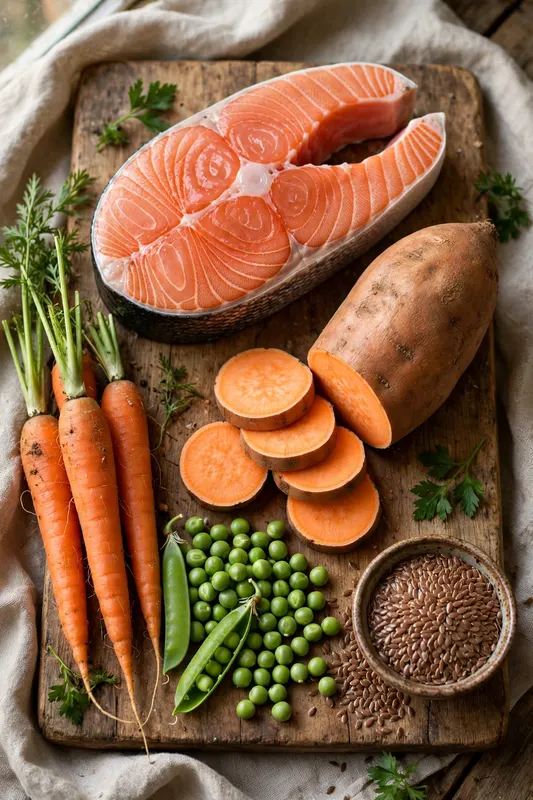
2. Salmon, Sweet Potato and Pea Bowl
A colourful bowl that pairs salmon’s omega-3s with sweet potato’s beta-carotene and peas’ gentle plant protein. The natural sweetness of the potato and peas balances the rich fish beautifully, and the soft texture suits puppies and seniors alike.
Ingredients & method: Bake 1 pound salmon fillet at 400°F (200°C) for 12 to 15 minutes until it reaches 145°F (63°C). Steam 2 diced sweet potatoes and 1 cup peas until tender. Flake the salmon, remove all pin bones, and mix everything together with 1 tablespoon olive oil. Makes about 5 cups; refrigerate up to 3 days or freeze for up to 2 months.
3. Salmon and Pumpkin Gentle Bowl
Designed for dogs with touchy digestion. Plain pumpkin puree settles stomachs because its soluble fibre absorbs excess water and firms up loose stools, while salmon provides rich, gentle protein that is easy on the gut. Keep this one ready for the days your dog’s tummy is off.
Ingredients & method: Bake 1 pound salmon fillet at 400°F (200°C) until it flakes and reaches 145°F (63°C). Cook 1 cup white rice and stir in 1 cup plain pumpkin puree (not pie filling). Flake the salmon over the top, check for bones, and mix in 1 tablespoon plain yoghurt if your dog tolerates dairy. Makes about 4 cups; refrigerate up to 3 days.
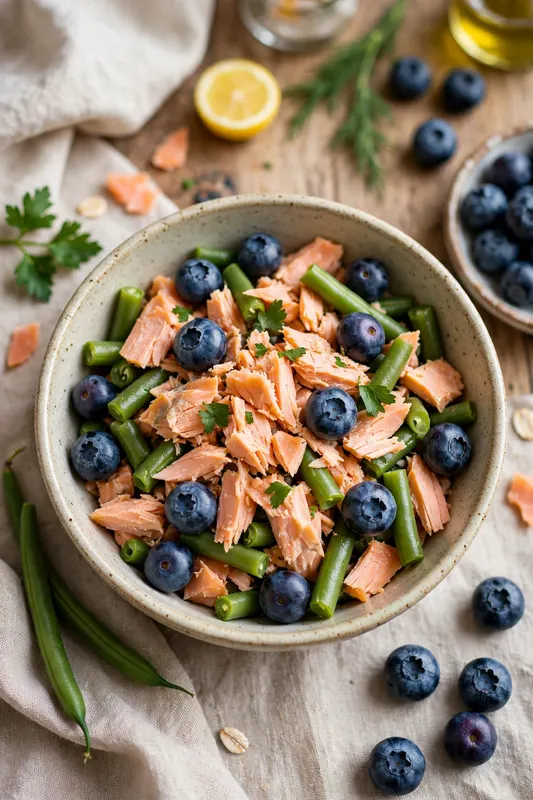
4. Salmon, Quinoa and Green Bean Bowl
Quinoa is a complete protein in its own right, so pairing it with salmon gives this bowl an impressive amino-acid profile. Green beans add crunch and fibre for almost no calories, a smart choice for dogs who need to watch their weight without feeling short-changed at dinner.
Ingredients & method: Cook 1 cup quinoa in 2 cups water. Bake 1 pound salmon fillet at 400°F (200°C) for 12 to 15 minutes until it reaches 145°F (63°C). Flake the salmon, remove all pin bones, and stir in the quinoa with 1 1/2 cups steamed chopped green beans. Makes about 5 cups; refrigerate up to 3 days or freeze for up to 2 months.
5. Salmon and Oatmeal Breakfast Bowl
A warm, porridge-style breakfast with a fishy twist. Oats provide slow-release energy and soluble fibre, an egg adds extra protein, and flaked salmon makes it a proper meal rather than a snack. Serve it slightly warm on cold mornings for a breakfast your dog will wake up for.
Ingredients & method: Simmer 1 cup rolled oats in 2 cups water until thick. Stir in 1 pound flaked cooked salmon (bones removed), 1 boiled egg (chopped), and 1/2 cup grated carrot. Cool to lukewarm before serving. Makes about 4 cups; refrigerate up to 3 days.
6. Salmon, Barley and Vegetable Pot
Barley is a hearty, fibre-rich grain that keeps dogs feeling full for hours, and its slightly chewy texture adds interest to the bowl. This pot mixes barley with a rainbow of vegetables for a wide range of vitamins in one pan, with salmon stirred through at the end.
Ingredients & method: Cook 1 cup pearl barley in 3 cups water for 40 minutes. Add 1 cup peas, 1 cup diced carrots, and 1 cup chopped spinach for the last 10 minutes. Bake 1 pound salmon fillet separately at 400°F (200°C) until it reaches 145°F (63°C), flake it, remove all bones, and stir through. Makes about 6 cups; refrigerate up to 3 days or freeze for up to 2 months.
7. Salmon and Zucchini Light Bowl
A lighter option for dogs on a weight-management plan. Zucchini is mostly water, so it bulks up the bowl without adding meaningful calories, and its mild flavour disappears into the salmon so even fussy dogs eat it happily. The omega-3s help keep the coat glossy even while calories stay low.
Ingredients & method: Bake 1 pound salmon fillet at 400°F (200°C) until it flakes and reaches 145°F (63°C). Steam 2 diced zucchini until tender and cook 1 cup brown rice. Flake the salmon, check for pin bones, and combine everything with 1 teaspoon olive oil. Makes about 5 cups; refrigerate up to 3 days.
8. Salmon, Brown Rice and Spinach Bowl
Spinach delivers iron, folate, and vitamins A, C, and K in every leaf, and it wilts down to almost nothing so dogs barely notice it. Brown rice adds fibre and staying power, making this a solid everyday meal for active adult dogs who need their omega-3s.
Ingredients & method: Cook 1 1/2 cups brown rice. Bake 1 pound salmon fillet at 400°F (200°C) for 12 to 15 minutes until it reaches 145°F (63°C). Flake the salmon, remove all pin bones, and stir into the rice with 2 cups fresh spinach (wilted in the hot rice) and 1/2 cup diced carrots. Makes about 5 cups; refrigerate up to 3 days or freeze for up to 2 months.
9. Salmon and Lentil Stew
Lentils are cheap, filling, and full of iron and folate, and they cook down into a soft, stew-like texture dogs love. This is a wonderful budget recipe that still delivers excellent nutrition, and it is naturally high in fibre for healthy digestion.
Ingredients & method: Simmer 1 cup dried lentils in 3 cups water for 25 minutes until soft. Bake 1 pound salmon fillet at 400°F (200°C) until it reaches 145°F (63°C). Flake the salmon, check carefully for bones, and stir into the lentils with 2 diced steamed carrots. Mash lightly. Makes about 6 cups; refrigerate up to 3 days or freeze for up to 2 months.
10. Salmon, Potato and Carrot Simmer
Salmon, potatoes, and carrots simmered into a comforting, hearty meal. This is the recipe for cold evenings and for dogs who need a little extra encouragement to finish their bowl, and the soft potatoes make it easy to eat for seniors with worn teeth.
Ingredients & method: Boil 2 peeled diced potatoes and 2 diced carrots in 4 cups water for 20 minutes until tender. Bake 1 pound salmon fillet at 400°F (200°C) until it reaches 145°F (63°C). Flake the salmon, remove all pin bones, and mix with the drained vegetables, mashing the potatoes lightly. Makes about 5 cups; refrigerate up to 3 days.
11. Salmon and Egg Protein Boost Bowl
Two complete proteins in one bowl make this the highest-protein recipe on the list, ideal for very active dogs, working dogs, and dogs rebuilding muscle after illness or surgery. Eggs are highly digestible, and their yolks add healthy fats and choline for brain health.
Ingredients & method: Bake 1 pound salmon fillet at 400°F (200°C) until it flakes and reaches 145°F (63°C). Boil 2 eggs (hard-boiled, shells removed) and chop. Flake the salmon, check for bones, and mix with the eggs, 1 1/2 cups cooked white rice, and 1 cup steamed green beans. Makes about 5 cups; refrigerate up to 3 days.
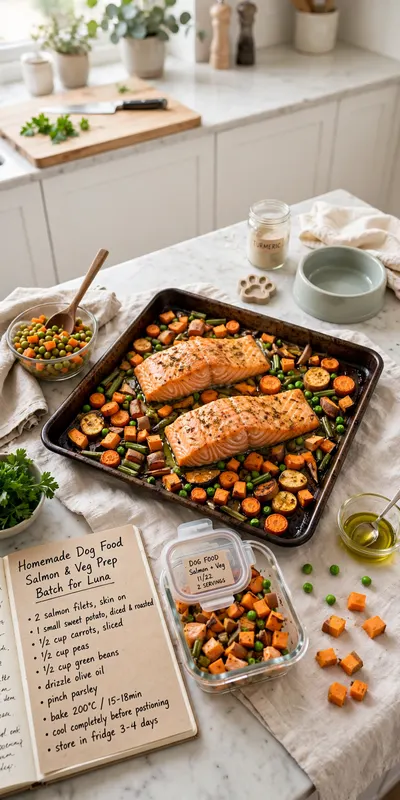
12. Salmon and Veggie Freezer Batch
The big-batch recipe for busy owners: one cook on Sunday that fills the freezer for the whole week. Mixing several vegetables means a wider range of nutrients, and portioning into single-meal containers makes weekday feeding as easy as warming a tub.
Ingredients & method: Bake 2 pounds salmon fillet at 400°F (200°C) until it flakes and reaches 145°F (63°C). Steam 2 sweet potatoes, 3 carrots, 2 cups green beans, and 1 cup peas until tender. Flake the salmon, remove every pin bone, mash the vegetables lightly, and stir in 3 cups cooked brown rice. Makes about 12 cups; portion into daily servings, refrigerate up to 3 days, and freeze the rest for up to 2 months.
Feeding Guide, Portions and Storage
How much homemade food your dog needs depends on size, age, and activity level. As a rough guide, a small dog under 20 pounds (9 kg) needs about 1 to 1 1/2 cups per day split across two meals; a medium dog of 20 to 50 pounds (9 to 23 kg) needs about 2 to 3 cups; a large dog of 50 to 90 pounds (23 to 41 kg) needs about 3 1/2 to 5 cups; and giant breeds over 90 pounds may need 5 cups or more. Active dogs and puppies need more, while seniors need less. Weigh your dog monthly and adjust portions to keep a visible waist and easily felt ribs.
Salmon is rich, so start with small amounts. Feed salmon meals once or twice a week rather than every day, which gives your dog the omega-3 benefits without overdoing the fat or the cost. If your dog has a history of pancreatitis, use small portions and choose the leanest recipes on this list, and ask your vet before feeding salmon regularly. Watch the stool during the first two weeks: loose or greasy stools usually mean the meals are too rich, and a smaller portion fixes it.
Raw salmon is the one hard rule in this article. Never serve raw or undercooked salmon to your dog, because it can carry a parasite that causes salmon poisoning disease, which is serious and needs urgent veterinary care. This risk is highest with salmon from the Pacific Northwest, but the rule applies everywhere: cook salmon to 145°F (63°C) every time, and never let your dog eat raw salmon scraps while you cook. The same caution applies to raw trout and other freshwater fish from the same regions.
Transition slowly whenever you change diets. Mix one part homemade food with three parts of the old food for three days, then half and half for three days, then three parts homemade to one part old food, and finally switch fully over about ten days. A sudden switch is the most common cause of loose stools in dogs starting home cooking. Watch the stool, coat, energy, and weight during the first month, and keep notes to share with your vet.
Storage matters more with fish than with other proteins, because fish spoils faster. Cooked salmon meals keep for 2 to 3 days in an airtight container in the refrigerator, and up to 2 months in the freezer in portion-sized containers. Always cool food completely before refrigerating or freezing, label containers with the date, and thaw frozen portions in the fridge overnight, never on the counter. Reheat gently to lukewarm, stir well so there are no hot spots, and throw away any food that smells sour or fishy beyond the usual salmon smell, or that has been left out for more than two hours.
One honest note: these recipes use wholesome, dog-safe ingredients, but a homemade diet fed long-term needs to be nutritionally complete, and that usually means adding a calcium source and a vitamin and mineral supplement designed for homemade diets. Plain home cooking is often too low in calcium, zinc, iodine, and vitamin D for a lifetime of feeding. Talk to your veterinarian or a board-certified veterinary nutritionist before making homemade food your dog’s full-time diet. Puppies, pregnant and nursing dogs, seniors, and dogs with kidney disease, liver disease, diabetes, or allergies need a tailored plan.
Frequently Asked Questions
Can dogs eat raw salmon?
No. Raw salmon can carry a parasite that causes salmon poisoning disease, a serious illness with vomiting, diarrhoea, fever, and swollen lymph nodes that needs urgent veterinary treatment. Always cook salmon to 145°F (63°C) and never let your dog eat raw salmon scraps. Cooked salmon is safe and wonderfully healthy.
Is salmon safe for dogs with allergies?
Often, yes. Salmon is a novel protein for many dogs, so it is a common choice when chicken or beef seems to cause itching or stomach trouble. That does not mean no dog is allergic to fish, only that salmon is a good first swap to try. If symptoms continue, talk to your vet about a structured elimination trial rather than guessing.
Can I use canned salmon?
Yes, if you choose the right tin. Use salmon packed in water with no added salt, drain it well, and rinse it before serving. Avoid salmon packed in oil with added salt, and never use smoked or cured salmon, which is far too salty for dogs. Fresh or frozen fillets are still the best choice when you can get them.
How often can my dog eat salmon?
Once or twice a week is ideal for most dogs. That is enough to deliver the omega-3 benefits for skin, coat, joints, and brain health without overdoing the fat or the cost. Salmon is a low-mercury fish, so mercury is rarely a concern at this frequency, but variety is still healthier than any single protein every day.
Can puppies eat homemade salmon food?
Puppies can eat plain cooked salmon and rice in small amounts, and the DHA in salmon is genuinely helpful for brain development, but growing puppies have very specific needs for calcium, phosphorus, and calories that a generic adult recipe does not meet. If you want to home-cook for a puppy, work with your veterinarian or a veterinary nutritionist to design a growth-stage diet, and keep extras under ten percent of daily calories.
The Bottom Line
Salmon is the omega-3 powerhouse of homemade dog food: rich in EPA and DHA for skin, coat, joints, and brain health, and a gentle novel protein for dogs who struggle with chicken or beef. These twelve recipes give you a full rotation of bowls, stews, breakfasts, and freezer batches built from plain, dog-safe ingredients. Cook it thoroughly to 145°F (63°C), remove every pin bone, feed it once or twice a week, and get your vet’s eyes on the plan before homemade food becomes your dog’s everyday diet. Do that, and salmon night becomes the healthiest night of your dog’s week.
Pin for Later